
Previous
The Meaning Behind Trilogy Rings
Discover the meaning behind trilogy engagement rin…


When choosing a diamond, shape is one of the first decisions to consider. While colour, clarity, cut, and carat weight all influence a stone’s appearance, shape defines its outline and with it, the overall personality of the finished piece.
Understanding diamond shapes allows you to make a selection that reflects both aesthetic preference and practical considerations, ensuring the final design feels considered, balanced, and personal.

A diamond’s shape refers to its external outline — round, oval, emerald, cushion, and so on.
A diamond’s cut, by contrast, describes how precisely its facets are proportioned and aligned to manage light. Two diamonds may share the same shape but differ dramatically in brilliance depending on cut quality.
Both elements work together. Shape defines style. Cut defines sparkle.
Shape influences several key visual factors:
How large a diamond appears once set
How it sits on the hand
How it interacts with light
The overall character of the ring design
Brilliant-cut shapes use triangular and kite-shaped facets to maximise light return and lively brilliance.
Shapes in this family include: Round Brilliant, Oval, Pear, Marquise, Princess, Cushion and Radiant.
These shapes are chosen for their vibrant sparkle and versatility across many setting styles. Round brilliants remain the most classic and widely selected shape, while ovals and pears create elongated, graceful lines. Cushion and radiant cuts offer softer or more contemporary alternatives.

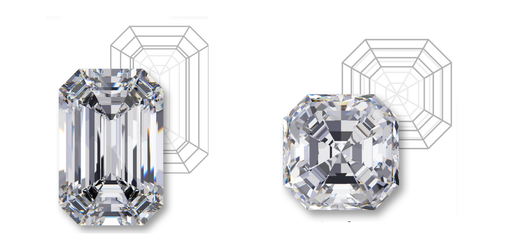
Step-cut shapes use long, linear facets arranged in parallel steps.
The most recognised step-cut shapes are: Emerald and Asscher.
Rather than producing lively sparkle, step cuts create a calm, mirror-like glow. Their open facet structure emphasises clarity and symmetry, giving them a refined, architectural presence. These shapes suit those drawn to clean lines and understated sophistication.
Some diamond shapes are selected as much for meaning as for light performance.
Heart-shaped diamonds are cut to express sentiment and symbolism. Their appeal lies in form and emotional significance rather than brilliance alone.
Other distinctive shapes, such as marquise or elongated pears, can create dramatic, individualistic statements, often chosen for their unique silhouette.
Within each shape category, proportions matter greatly. Two diamonds of the same shape and carat weight can appear different in size depending on how weight is distributed. Length-to-width ratios also affect how a diamond sits on the hand.
Professional guidance ensures chosen proportions complement both the wearer’s hand and the intended setting.
At Kayes Jewellers, diamond shapes are compared side by side under professional lighting. This allows proportion, balance, and presence to be assessed clearly, beyond what a certificate can convey.
Through Diamonds Your Way, clients explore certified loose diamonds online, shortlist preferred shapes, and then view selected stones in person before a bespoke ring is created around the chosen diamond.
This process ensures each selection feels informed, transparent, and personal.
Explore our certified loose diamonds online or visit us in store to compare shapes side by side under professional guidance.