
Previous
Building a Jewellery Collection: Where Would We Be…
Jewellery collections grow naturally over time, wi…


In an age of precision-cut modern diamonds, vintage diamonds hold a unique sparkle. Each one is a piece of history - hand-cut by master craftsmen long before today’s technology existed, and cherished for its individuality, charm, and romance.
From candlelit Georgian salons to glittering Edwardian ballrooms, vintage diamonds have illuminated love stories for centuries. Their appeal lies not only in their beauty, but also in the craftsmanship and heritage they represent.
But what exactly are vintage diamonds? And what makes them different from the stones we see in most engagement rings today?
The term vintage diamond typically refers to diamonds cut in the 16th to early 20th centuries, before the invention of modern cutting techniques. Unlike today’s laser-guided precision, vintage diamonds were shaped entirely by hand.
This means they are rarely symmetrical and often show charming irregularities - but these qualities give them personality. Instead of the sharp sparkle of modern brilliants, vintage cuts often emit a soft, romantic glow, especially under candlelight.
First seen in the 1500s, the rose cut is one of the earliest known diamond cuts.
Flat-backed with a domed top that resembles the petals of a rose, this cut usually has between 3 and 24 triangular facets.
With no pavilion (pointed bottom), rose cuts emit a gentle shimmer rather than a fiery brilliance.
Their subtle, romantic glow made them especially popular in Georgian and Victorian jewellery.
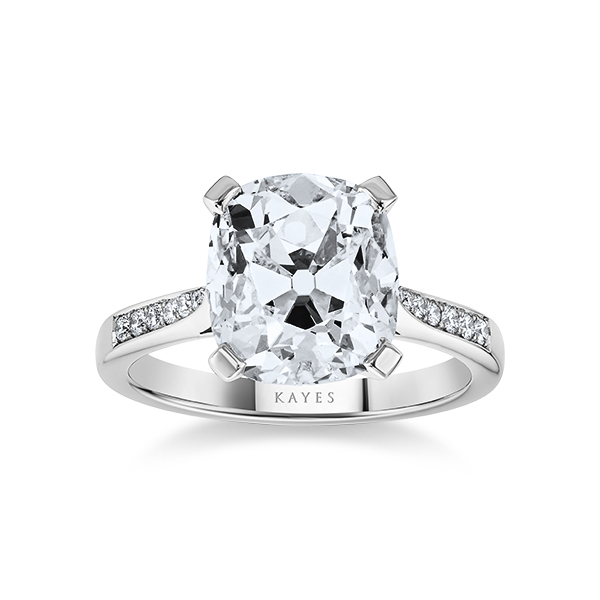
Typically cushion-shaped with rounded corners, a high crown, small table, and visible culet (bottom facet).
Each stone was hand-cut with simple tools, creating charming irregularities and individuality.
Known for its fiery sparkle, designed to dazzle in candlelight.
The Victorian era (1837–1901) saw diamonds become widely sought-after, thanks to increased availability after the discovery of South African mines.
“Victorian cut diamonds” is often used to describe old mine or early brilliant-style diamonds set in ornate 19th-century jewels. These stones typically feature high crowns, small tables, and deep proportions.
Diamonds from this era were often paired with rich yellow gold or rose gold settings, sometimes with intricate carved details or symbolic motifs.
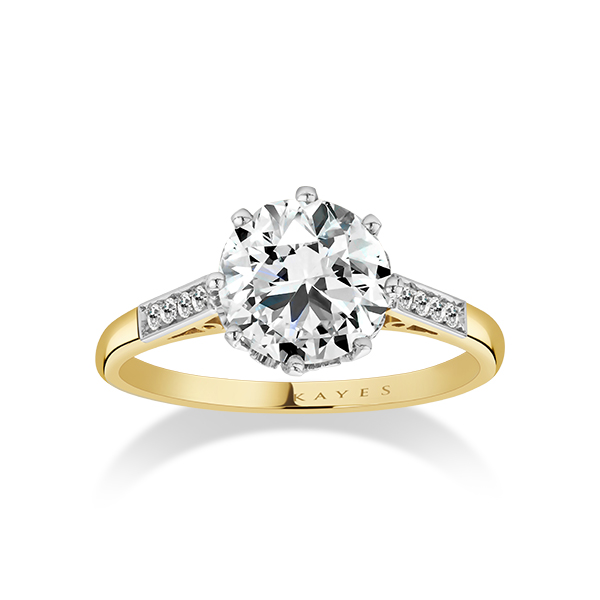
The old European cut evolved from the old mine cut during the late Victorian and Edwardian periods.
Rounder in shape, with a larger table, more facets, and a smaller culet.
Still cut by hand, but with greater emphasis on symmetry.
Often regarded as the direct predecessor to the modern round brilliant.
Loved for its soft, romantic brilliance and historical character.
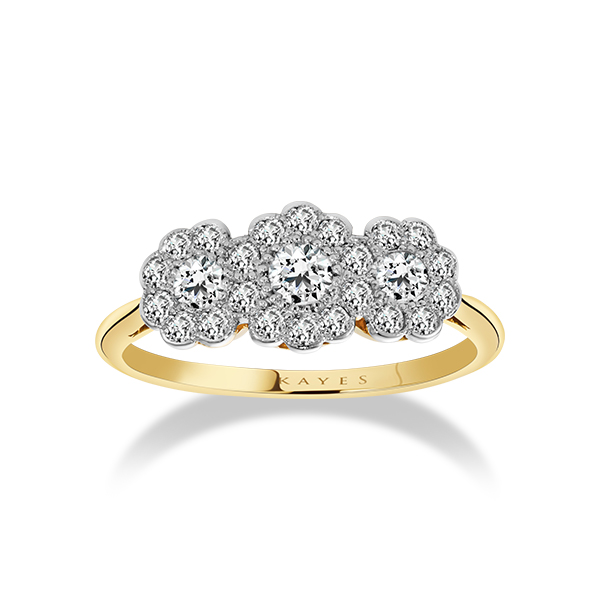
Transitional diamonds represent the bridge between old European cuts and the modern round brilliant.
Created in the 1920s–1930s, when advances in cutting tools allowed for greater precision.
Features include a round outline, lower crown, smaller culet, and more refined proportions.
Transitional diamonds offer both old-world charm and enhanced sparkle.
Popular during the Art Deco era, they are prized for combining vintage character with emerging modern brilliance.
A simpler style of diamond cutting, often used in smaller stones.
Typically have just 17 or 18 facets compared to the 57–58 of a full brilliant cut.
Create a soft glimmer rather than intense sparkle.
Commonly found in antique eternity rings, watch dials, or as accent stones alongside larger diamonds or gemstones.
Mazarin Cut (17th Century): One of the first “brilliant” cuts, with 34 facets, named after Cardinal Mazarin of France.
Peruzzi Cut (18th Century): A refinement of the Mazarin, featuring 58 facets and improved light reflection.
Old Cut Diamonds: A broad term often used in the trade to describe any pre-modern brilliant, including old mine, old European, and transitional cuts.
Character & Uniqueness - No two vintage diamonds are alike; each carries the signature of the craftsman who cut it.
Romance & History - Many have adorned rings and jewels for over a century, linking them to stories of the past.
Softer Beauty - Their glow is less about perfect brilliance and more about depth, warmth, and individuality.
Vintage diamonds are more than gems; they are windows into history, each one bearing the marks of its time and maker.
Whether you are drawn to the cushion-shaped charm of an old mine cut, the fire of an Old European cut, or the balance of a transitional stone, these diamonds offer beauty with depth and meaning.
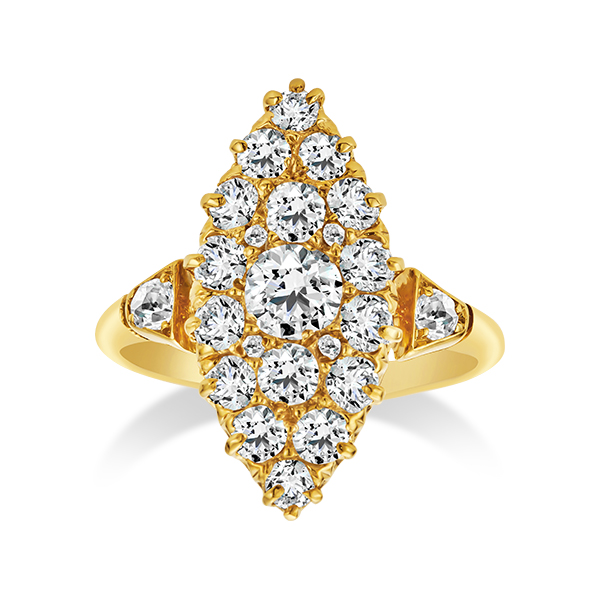
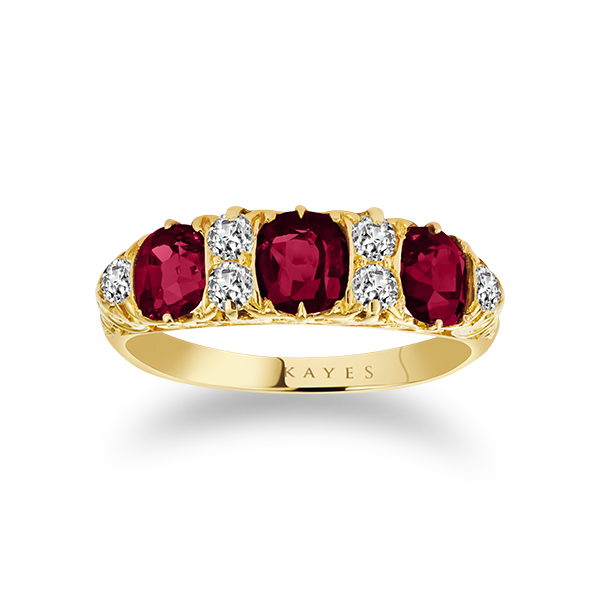
Discover our full Vintage Rings Collection, featuring antique diamonds and coloured gemstones, each one carefully sourced and crafted to celebrate the romance of a bygone era.